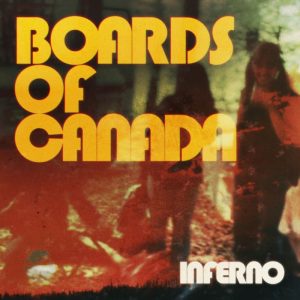
Ready for the next opinion piece about the return of Boards of Canada?
My connection with Boards of Canada goes back decades. Through the years, the music of these Scottish brothers has become part of my musical identity. It is not simply something I listened to, it shaped how I hear electronic music. For me, the early works from the mid-to-late 90s are legendary, but the dark, unsettling beauty of Geogaddi (2002) remains a personal formative high point and still feels like a transmission from some half-remembered, half-forbidden place.
After 13 years of silence, Inferno arrives with the weight of expectation. As a long-time listener, I also jumped on that bandwagon. Still, I asked myself: do the Boards of Canada still matter in the present? After several listens, the answer is yes. But Inferno is not a new peak.
The album opens strongly. The familiar bleeps, warped tones and uneasy atmosphere are immediately there. Prophecy at 1420 MHz and Hydrogen Helium Lithium Leviathan give the record an impressive early momentum. The synths are spooky, the background movements feel reversed and unstable, and religious samples create a church-like atmosphere. It is recognisably Boards of Canada, but sharper and more direct. That sharper sound is one of the main differences on Inferno. Compared with earlier records, it feels less grainy, less cassette-worn and less wrapped in analogue decay. The production is clearer and more forceful, which gives several tracks a real sense of scale. At the same time, something is lost. The music feels a little less organic and less nostalgic. The warm haze of old is still there, but it no longer covers everything. For some listeners this will make the album feel more modern and powerful, for others it could feel slightly less magical.
The first part of the album also has some problems. Age of Capricorn arrives with an epic, almost closing-track quality that feels oddly placed so early in the sequence. Father and Son then pushes the vocal samples very far to the front. On its own, it is not a bad track, and its almost hip-hop-like directness may even be deliberate, but in the flow of the album it interrupts the build-up. The samples become too obvious and weaken the spell created by the opening minutes.
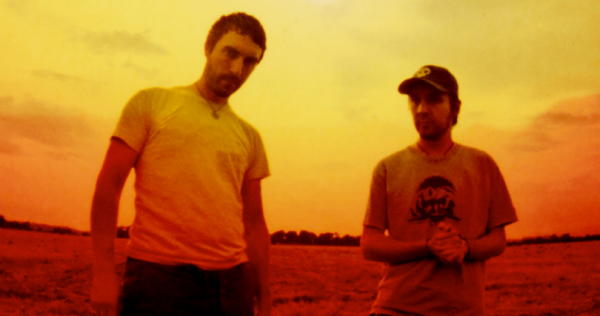
Once Inferno moves past this uneven stretch, it becomes much more convincing. Somewhere Right Now in the Future is dreamlike and timeless, while Naraka feels like one of the album’s key moments. It has the directness of a possible single, but also the dark pull of a ritual descent. From there, the album drifts more quietly through its middle section. It becomes mistier, darker and more patient, connecting the occult unease of Geogaddi with the colder, apocalyptic mood of 2013’s Tomorrow’s Harvest.
The strongest part of the record comes when Deep Time opens up. The synth work is wide, patient and beautifully controlled. It gives the album a sense of space that feels vast without becoming empty. When All Reason Departs follows, the mood turns bleaker and more mechanical. This is Boards of Canada at their best, haunting, precise and quietly devastating, with small melodic shifts carrying real emotional weight. The final stretch does not build towards a grand climax but slowly withdraws. There is still some spectacle in Arena Americanada, but as the album moves towards You Retreat in Time and Space, an eerie calm takes over. Familiar traces of earlier Boards of Canada drift back in, not as simple nostalgia, but as something fragile and almost hopeful.
As an album, Inferno is carefully built and often impressive. It has a clear atmosphere, strong production and has several moments that rank among the best things Boards of Canada have done. Yet it also has clear weaknesses. The early sequencing is not fully convincing, some vocal samples are too dominant, and the cleaner sound sometimes lacks the strange, grainy intimacy that made their classic work feel so otherworldly. Boards of Canada have always been elusive by default, difficult to fully grasp or explain, and Inferno only strengthens that quality. Even when the sinister themes feel more direct, the album keeps slipping out of reach.
So no, Inferno does not surpass Music Has the Right to Children (1998) or Geogaddi. Those records still stand apart, not only because of their sound, but because they changed the way electronic music could feel. Inferno does not do that. It is a solid, serious and often beautiful album, but also one that confirms the duo’s strengths more than it expands them.
Label: Warp, 2026
Buy it here: https://warp.net/releases/590960-inferno
Track listing:
- Introit (0:36)
- Prophecy at 1420 MHz (5:04)
- Hydrogen Helium Lithium Leviathan (4:44)
- Age of Capricorn (3:52)
- Father and Son (3:24)
- Somewhere Right Now in the Future (2:26)
- Naraka (5:01)
- Acts of Magic (1:18)
- Memory Death (2:37)
- The Word Becomes Flesh (5:20)
- Into the Magic Land (4:35)
- Blood in the Labyrinth (4:55)
- Deep Time (3:18)
- All Reason Departs (6:14)
- Arena Americanada (5:22)
- The Process (3:01)
- You Retreat in Time and Space (5:25)
- I Saw Through Platonia (2:39)
Review by Wander Meulemans // 070626

